


De Gaulle: Résistance premiered in French cinemas on June 3, followed by De Gaulle: Liberté close behind on June 26 a rare Friday release in the country, and more in line with the Hollywood blockbuster model. The two films are not a traditional biopic of the exiled general and later French president,but are set specifically between 1940 and 1944. They explore de Gaulle’s actions during the World War II to unify the Resistance and secure France’s independence. As Pathé Films president Ardavan Safaee describes, “it’s the moment when de Gaulle became de Gaulle,” a closer look at the wartime hero that he calls “a fascinating part of his story that had never been told before.”
The first film begins in 1940 when France was defeated by German forces and signed the armistice, but de Gaulle refused to accept surrender and fought against all odds for France’s freedom. The second picks up where the first leaves off in 1942 and extends to the liberation of Paris in 1944. Simon Abkarian takes on the role of de Gaulle alongside Simon Russell Beale as Churchill, with a who’s who cast, including Benoît Magimel as General Koenig, Mathieu Kassovitz as Admiral Darlan, Niels Schneider as General Leclerc, Campbell Scott as Franklin D. Roosevelt, Félix Kysyl as Jean Moulin, Florian Lesieur as young anti-Vichy resistance fighter Fernand Bonnier de La Chapelle and Anamaria Vartolomei as fellow resistance fighter Livia.
The double feature is based on Julian T. Jackson’s book, De Gaulle: A Certain Idea of France, which inspired Pathé chairman Jérôme Seydoux and became a passion project six years in the making. Published in 2019, the book prompted Seydoux to immediately envision a big-screen adaptation. The films were written during the Covid pandemic, then shot between July 2023 and May 2024, with editing continuing from June 2024 through June of this year, just ahead of the release. Seydoux produced the films with Pathé Films president Ardavan Safaee and Axelle Boucaï. Co-producers are TF1 Films Production, Belvedere, Ness Films, Logical Content Ventures and Auvergne-Rhone-Alpes cinema with Beside Productions. The film received CNC support both automatic and selective and via regional aid in Paris Region, Provence-Alpes-Cote d’Azur, and Auverge-Rhone-Alpes, in addition to investment from Canal+, Disney+ and TF1. The two films are set between Paris, London, and Lyon with several key scenes across the globe, from Casablanca to Doualla, Libya and several countries across Africa.
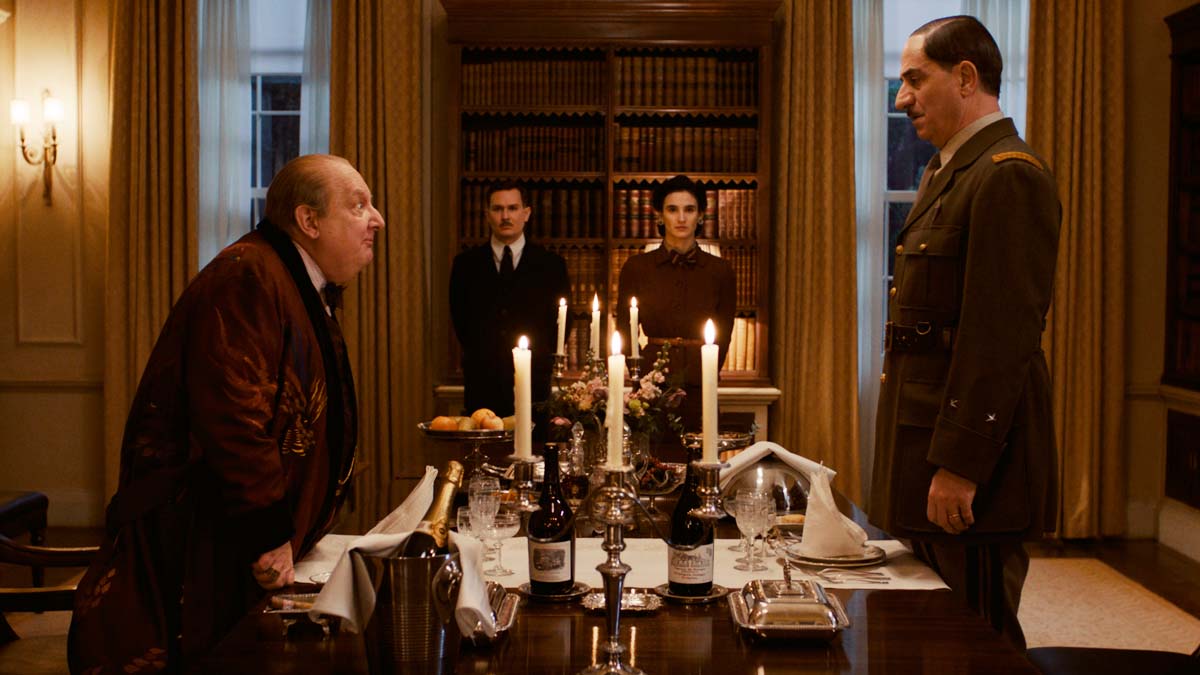
In De Gaulle, everything is supersized, from the budget, to the runtime (160 minutes per film), to grandiose battles featuring dozens of tanks and sweeping vistas of warn-torn lands across multiple continents, and scenes of massive crowds gathering at historic landmarks in Paris.
While everything is visually grand, it was important for both Baudry and producers to balance such lavish locations and adrenaline-fueled actionsequences with more intimate character-driven moments, which is why the film is spread out in two parts.
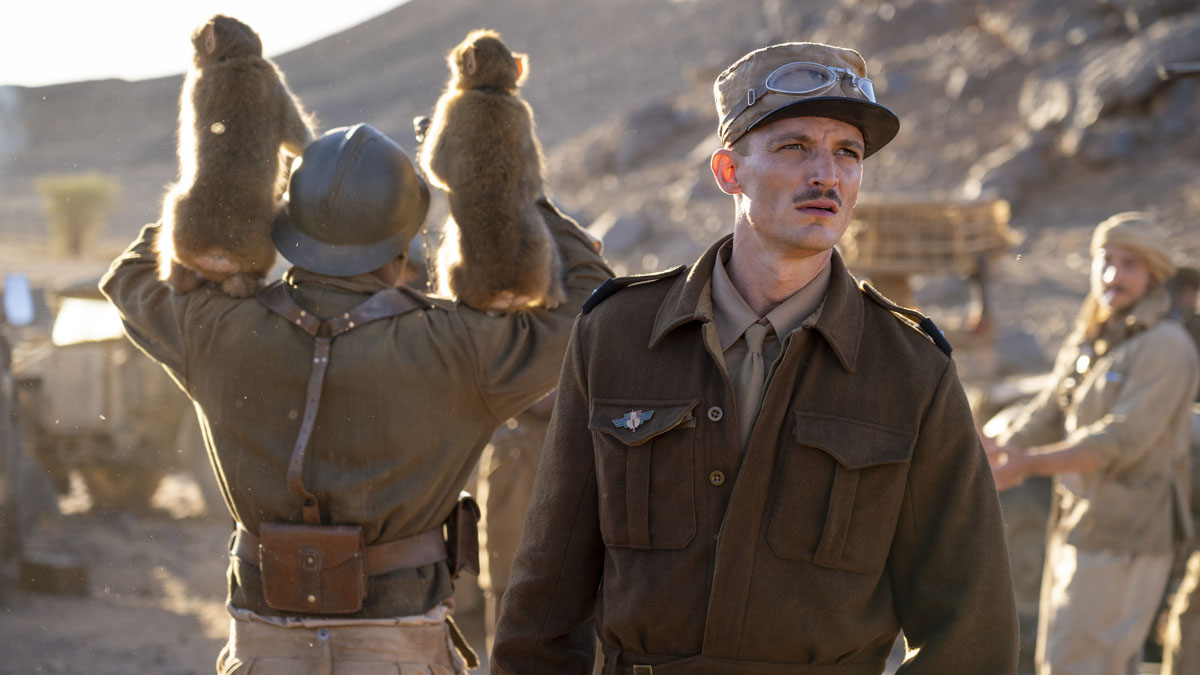
“We couldn’t fit everything into one film – we needed time to fully develop the characters and we didn’t want to lose the emotion driving the story,” Safaee explained. “Epic battles take time.” he added. The Battle of Bir Hakeim for example, set in the Libyan desert and shot in Morocco, runs for some 25 minutes in the film.
The battle scenes combine on-location production prowess with sophisticated VFX work by BUF, Pierre Buffin’s special effects powerhouse, based between Paris, Montreal and Los Angeles. The company is known for other large-scale projects on both sides of the Atlantic like Project Hail Mary or House Of the Dragon.
BUF’s VFX teams were involved throughout the entire the process, from pre-production work through on-set supervision to an extensive post-production period that began in November 2024 and wrapped shortly before the film’s theatrical release. BUF was on set with special effects teams who staged explosions then made them bigger in post-production using advanced 3D technology.
BUF worked on 130 shots for the Bir Hakeim battle sequence alone. There were three tanks on site, that BUF then multiplied in post-production into some 50 tanks seen on screen and transformed them into more period-accurate designs. In the second film, BUF worked on around 100 shots for the battle of Ksar Ghilane, another lengthy film-within-a film packed with action and explosions.
For the naval battle scene, most of BUF’s post-production work was done using 3D technology. They filmed reference shots of the wakes from the boats and the mountains in Corsica, whichwere then used to recreate scenes set in Mers el-Kebir, the the Mediterranean port in Northwest Algeria.
Five other studios also collaborated: Benuts, Trimaran, Rodeo FX Paris, Mathematic, The Yard, and Mac Guff.
For the scenes set during the war in France’s capital, Safaee explained: “Paris hasn’t changed much since the 1940s. There may be new cafés, restaurants and shops, but the buildings are similar.”
The film shot on location across Paris in the summer of 2023, from the Pont Royal bridge to the Saint-Geneviève university library of the Sorbonne, the Pantheon, the rue St Jacques in the Latin Quarter, at the Cirque d’Hiver and the Gare de l’Est train station.
For one key scene of a giant protest at the Arc de Triomphe, the production was able to get permission to completely stop traffic at the busiest intersection in the city, the Place de l’Étoile, during the national holiday of August 15.
There were 300 extras for that shoot alone. To recreate the Arc de Triomphe and surrounding area, BUF’s VFX designers “erased all anachronisms, replaced buildings that were not period-appropriate and made them look older and grungier,” explained Marion Eloy, VFX supervisor at BUF, who worked on the film for more than three years.
In 2024, the city was taken over by the Olympic Games, making it impossible to shoot a project of this scale, so all locations were completed beforehand. For the work in studios, including interior scenes featuring Churchill and de Gaulle, it was shot at the recently revamped Studios de Bry and the Dark Matters Studios, just outside of Paris.
While Lyon has undergone more changes since the war, producers still shot on location at several spots across the city, particularly those tied to Jean Moulin’s storyline. De Gaulle also shot in Normandy, and in Morocco in Casablanca, Tangiers and Erfoud particularly for the giant battle scenes.
Safaee said the biggest challenge of a project on such large scale was “changing scenery every three or four days, which for a period film is a vast endeavor for the entire crew.” This required transforming each set with different costumes, cast and extras, and for giant battle scenes, airplanes and tanks.
The double feature, like most features, was not shot in chronological order. “We began with the liberation of Paris,” Safaee revealed, the final scenes of the second part of the film.
For a film depicting the history of France, “our ambition is to sell it internationally, particularly in major territories, so it can reach the widest possible audience. It’s not just a film for France.” The film has already sold widely to more than twenty international markets including the UK, most of Europe, and Asia, Latin America, Africa and Canada.
The film is not Pathé’s first foray into big-budget blockbuster productions, following two big-budget blockbusters based on internationally renowned IPs : The Three Musketeers two-part film and The Count Of Monte-Cristo, both of which were box office hits in France and sold worldwide.
Safaee added: “We have all the tools and talent we need in France to make ambitious films. It’s not just about the technology for high production value – it’s about finding good stories and the people capable of telling them from writing to directing and acting. We have some of the top production designers, costume designers, cinematographers and special effects supervisors in the world to make films of this ambition. All supported by an exceptional tax rebate and a cinema ecosystem based on obligations for pre-buying from different broadcasters.”
LA BATAILLE DE GAULLE
Director: Antonin Baudry
Screenplay: Bérénice Vila & Antonin Baudry, based on De Gaulle : A Certain Idea of France by Julian T. Jackson
Production: Pathé Films
Coproduction: TF1 Films Production, Logical Content Ventures, Belvédère, Ness Films, Beside Productions: Auvergne-Rhône-Alpes Cinéma, Aonia Ventures, Laurent Dassault Rond-Point, Ouroboros Entertainment, Stags Participations II
Distributor: Pathé Films
International Sales: Pathé Films
French Release: June 3 / June 26