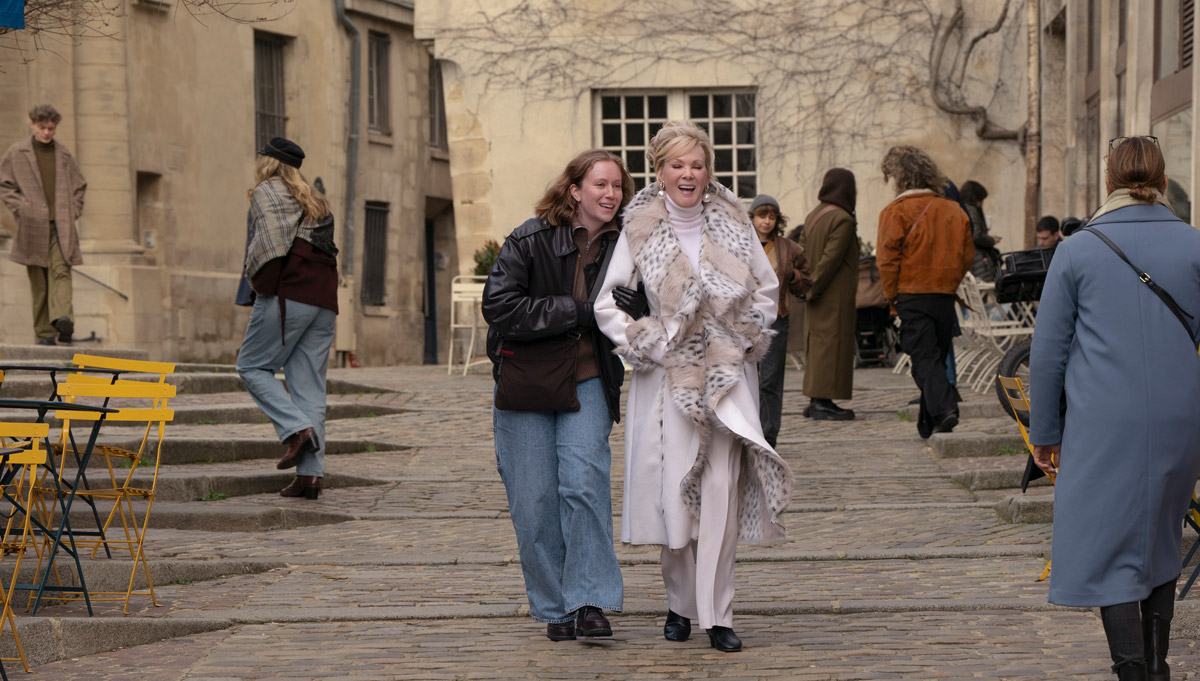
Creators Lucia Aniello, Paul W. Downs, and Jen Statsky were staying in Paris when they began developing Hacks in 2019 and always envisioned the city as the backdrop for the show’s ending. Seven years and several Emmy wins later, that vision finally became reality. But bringing Deborah Vance (Jean Smart) and Ava Daniels (Hannah Einbinder) to Paris, and especially the Louvre, proved far more challenging than expected.
A Finale Planned from the Start

Universal Television hired the Paris-based production services company Meadow Pictures, headed by its founder Valentin Françoise and partner Oscar Thorneman, to manage the French shoot. “They contacted us in summer 2025, when the episode hadn’t even been written yet,” recalls Françoise. “The brief was quite simple: they wanted emblematic, high-end Paris locations, one or two bistros and some more atypical places.”
“The Louvre, the Paul Bert flea market and the Hôtel de Crillon were already written into the script,” says Bricker. “But we still needed to find a beautiful church, a train station and a café.” The scouting trip done in June 2025 was about seeing those locations in person while exploring places that might further inspire the filmmakers.
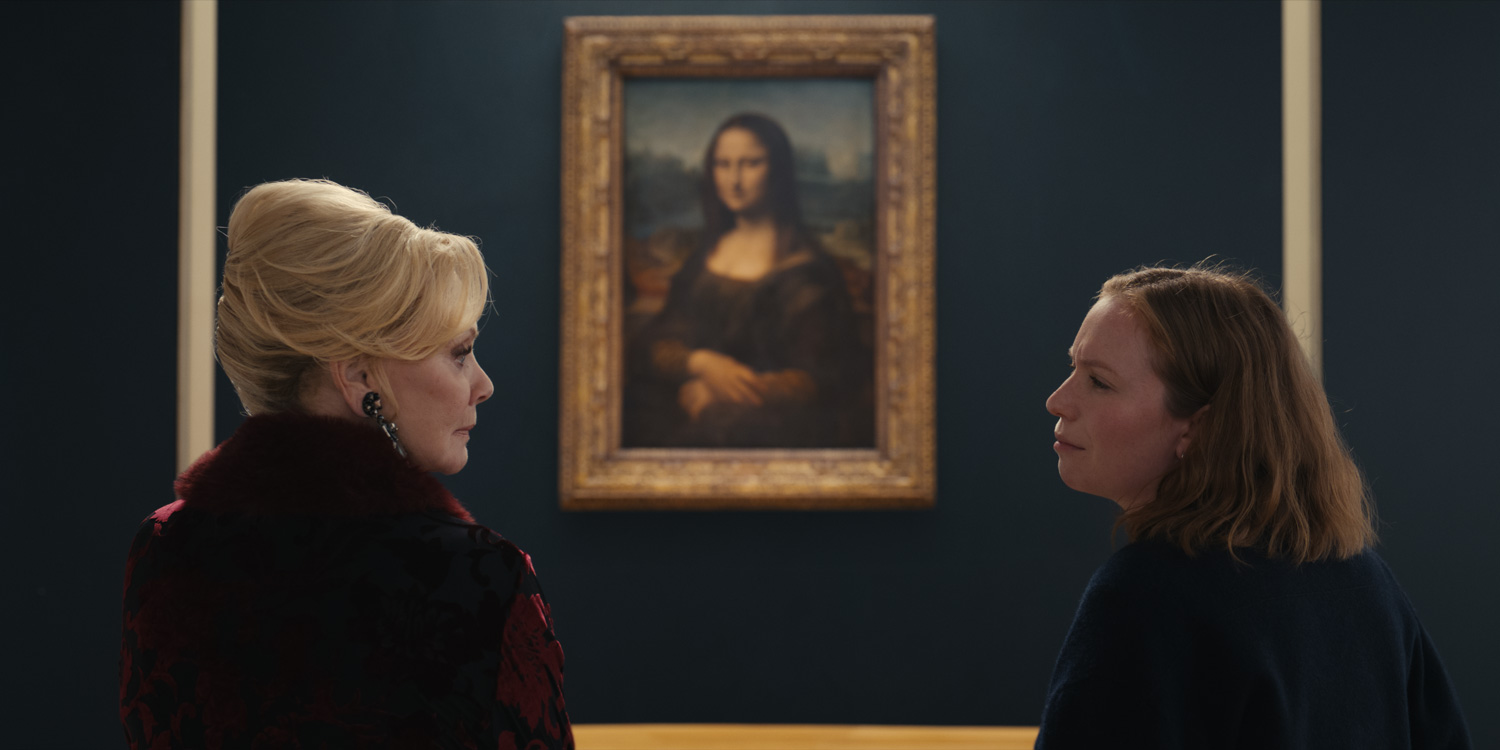
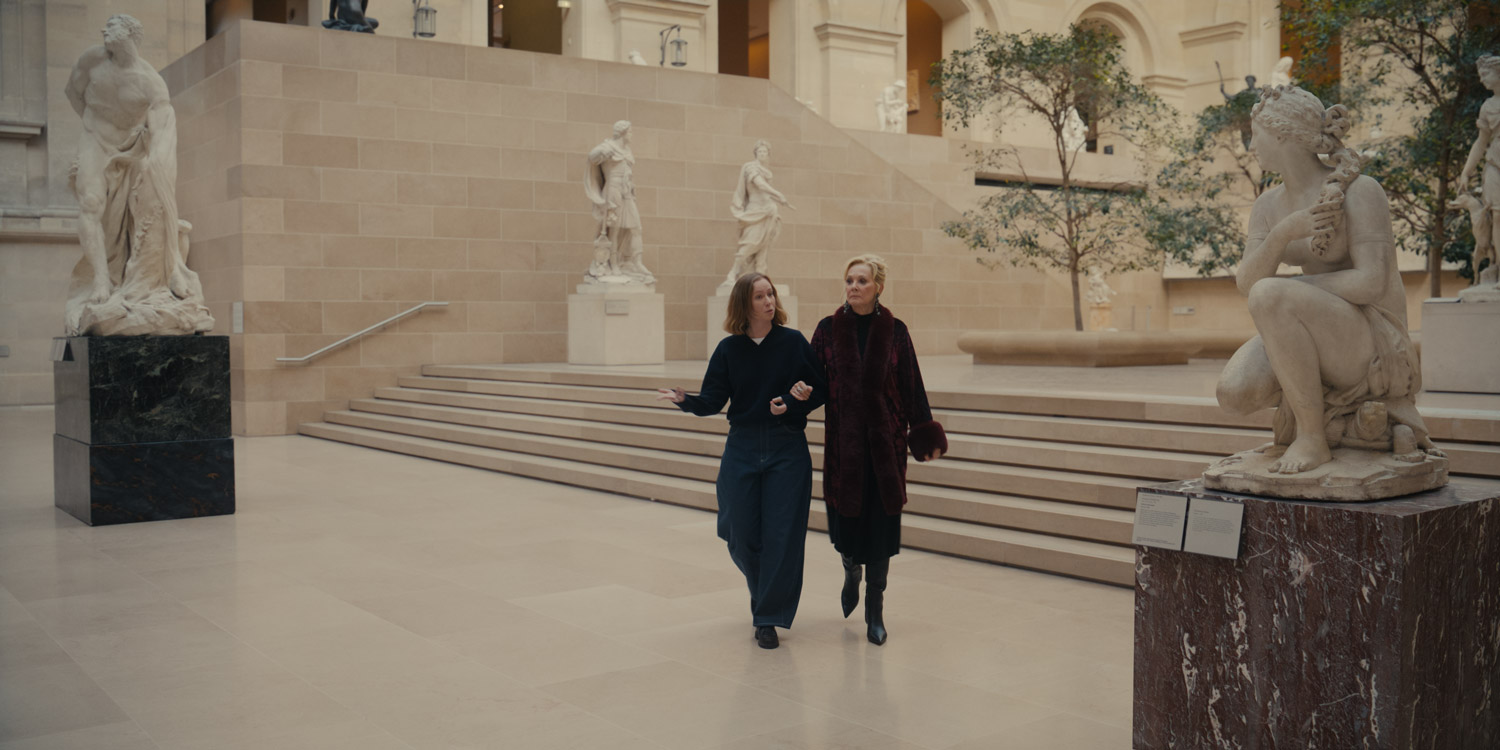
One stop proved particularly memorable. The team visited the Louvre on a Tuesday when the museum is closed to the public. “Scouting the Louvre was pretty surreal,” recalls Bricker. “We essentially had a private tour. It was a once-in-a-lifetime moment.”
A Heist Hiccup
Then, in October 2025, came the Louvre’s jewellery heist. “We had just confirmed that we could shoot at the Louvre, and then the robbery happened,” says Françoise. “The museum had to cancel everything that was scheduled to film there.”
Access was withdrawn, and the team began looking for alternatives. “But nothing could really compare to the Louvre,” says Bricker. After months of negotiations, complicated further by staff strikes and management turmoil, permission finally came through days before the end of the Paris shoot but with one major condition: the crew had to be only ten people, cast included.
The restriction unexpectedly dovetailed with the visual approach Bricker and Aniello, who directed the finale, had devised.
Rather than a problem, the restriction became a creative advantage. “Our story has taken us all over the world and grown increasingly expansive, but in the end, the story really comes back to its core: the relationship between two characters who love each other,” says Bricker.
They wanted the Paris sequences to feel “a little more intimate, a little more stripped down”, he adds. “In a way, the logistical limitations ended up reinforcing what we were trying to accomplish creatively.” For Bricker, the final Louvre shoot was particularly poignant.
Across Paris
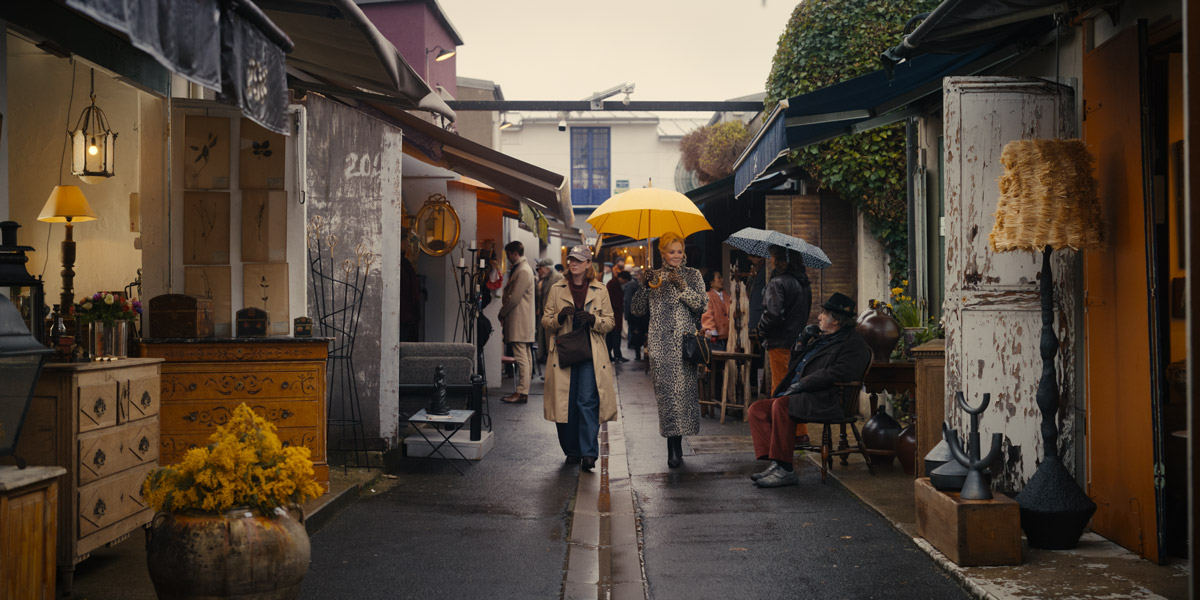
The Louvre was only one stop on an ambitious shoot across the capital. Filming began at Marché Paul Bert in the Saint-Ouen flea market, which was high on the creators’ wish list from the outset, then moved to The Bridge nightclub beneath Pont Alexandre III, Église Saint-Gervais, Place Vendôme and the Hôtel de Crillon. “The flea market was the place they wanted,” says Françoise. “They were really attached to it.”
One of the most demanding shoots took place at Paris Gare de Lyon, which doubled as both itself and Paris Charles de Gaulle Airport. “We couldn’t shut down the station, so it was fully operational while we were filming,” Bricker says. “We basically embraced the chaos. They’re important scenes, and I think having all that real activity around us added a sense of authenticity.” Françoise credits French rail operator SNCF with facilitating the complex shoot. “Everything you see on screen, the cones, the blockers, all of that had to be organized.”
Meanwhile, a second unit filmed at Place de l’Étoile for a driving sequence around the Arc de Triomphe. The scene had been filmed against a green screen in Los Angeles, requiring Meadow to source an identical red Fiat and recreate the surrounding action using stunt drivers. The production also filmed at the Eiffel Tower for the final, where the iron lady behind them transforms into its Las Vegas counterpart.
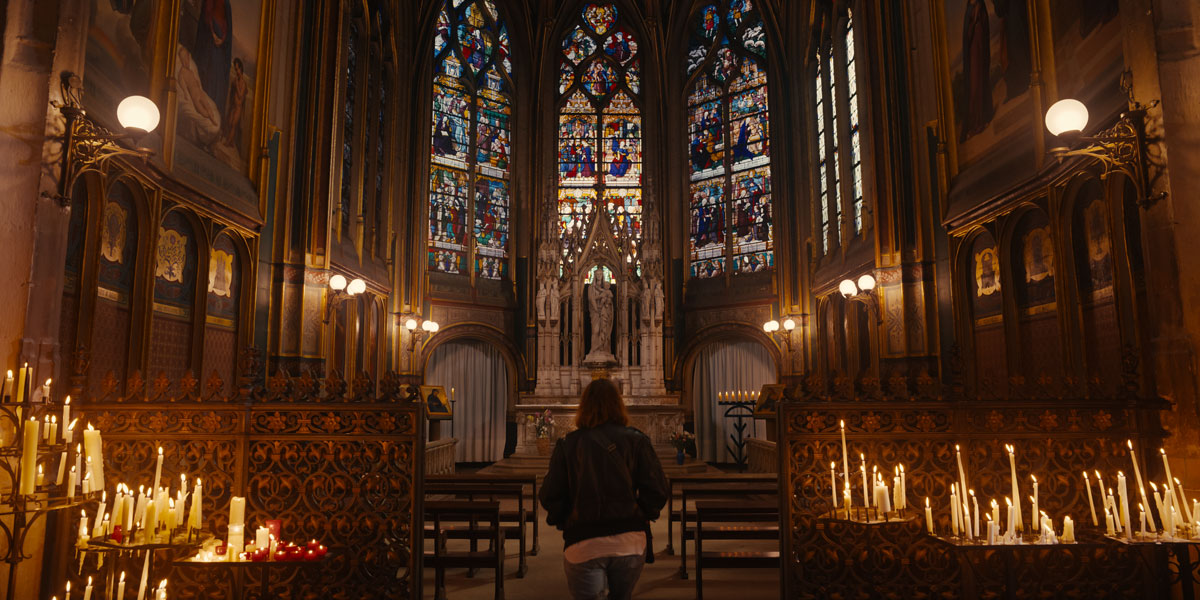
Another key location was Église Saint-Gervais in the Marais, where Einbinder filmed one of Ava’s most emotional sequences. “We wanted to capture the grandeur of the space while maintaining the intimacy of being with Ava in such a vulnerable moment,” says Bricker. With the French gaffer William Dumont, he largely embraced the church’s existing light, with Dumont creating gel frames patterned to match its stained-glass windows and supplementing the candlelight. “We tried to let the architecture and the existing light guide our approach,” says Bricker.
The crew was largely French, with a handful of key collaborators travelling from the U.S.. “We weren’t trying to exactly replicate the look of our Las Vegas and Los Angeles work, but we still wanted the series to feel visually cohesive,” he says. “Our French crew really embraced that approach.”
For Valentin, the production also demonstrated how French crews have adapted to the growing number of international shoots coming to the country. “They know the U.S. codes, but you also need to work in a local way, and that was something the Americans really appreciated,” he says. “It becomes a melting pot among younger generations and very experienced French crews who know how to make things work.”
One Last Dance
One of Bricker’s favorite moments came at The Bridge nightclub, where Deborah and Ava dance along the Seine to Georgia’s “About Work the Dancefloor” song. Bricker and Dumont pared the club’s lighting down to a red-and-white palette, adding strobes and moving lights that flared into the lens. “It was actually a pretty simple setup, and it felt a little like being back in film school,” says Bricker. “Everyone was vibing to the music and reacting to the performances in real time.”
Valentin also credits the city’s Mission Cinéma with helping Meadow navigate the demanding schedule. “Mission Cinéma changed our lives,” he says. “Some arrondissements are more complicated than others, so we constantly had to find solutions. It was very challenging.”
For a series first imagined in Paris, returning to the city for the end carried a particular significance. Françoise may have joined the journey only for its final stretch, but he understood the significance of bringing it full circle. His verdict: “Mission accomplished.”