Between sunny spells, the Iron Lady stands proudly, with the constant flow of visitors strolling at its feet. This is where Virginie Polanski and Btissame Ouahbi, who oversee film shoots and productions at the Eiffel Tower, have arranged to meet us. Having worked there for four and eight years respectively, they follow the projects welcomed on site, from initial discussions with production teams through to their implementation on the site.
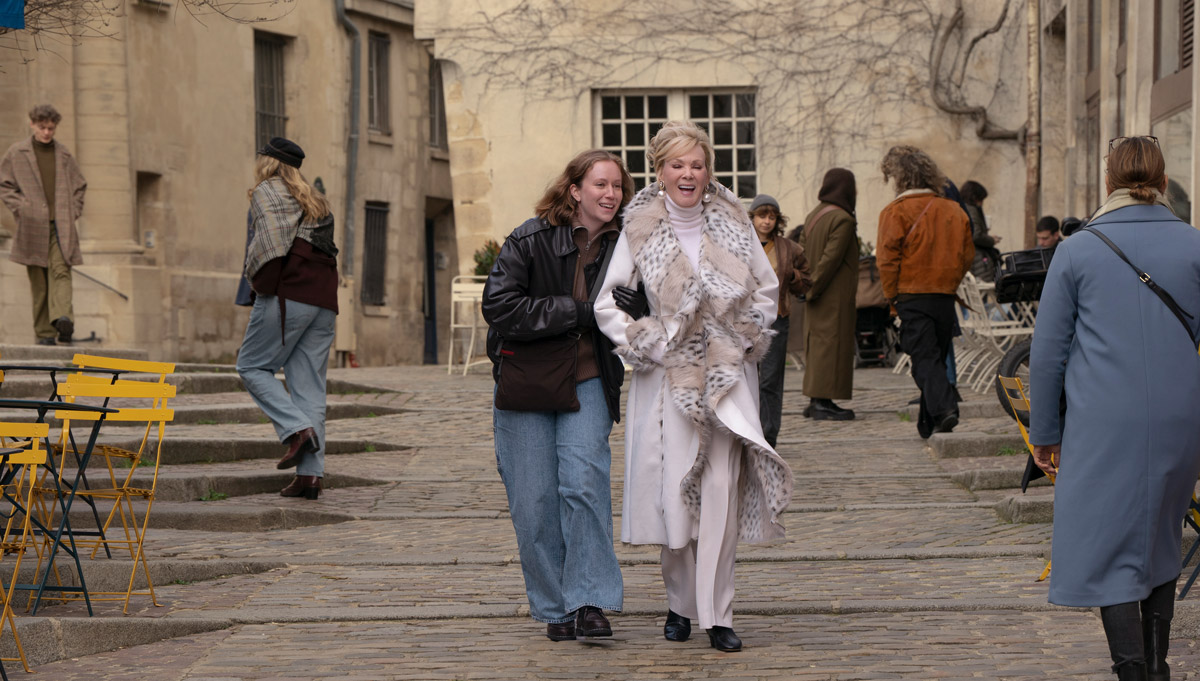
Created in 2005 and integrated into the Société d’Exploitation de la Tour Eiffel (SETE), whose mission is to manage and operate the monument on behalf of the City of Paris, the filming department supports feature films, music videos, documentaries, television programmes, digital content or even institutional films. “Shoots generate interest. For example, there has been an Emily in Paris effect since 2020.” “Guides organize themed tours in front of the series’ iconic locations, including the Eiffel Tower,” notes Btissame Ouahbi.
The visit begins with one of the site’s most emblematic views: the second floor, 115 meters above the ground, built on two levels. “Many crews ask to film there. With its structure and constantly moving lifts, it is somewhat the soul of the tower,” she continues. Managing filming at the site also means seeking to preserve its image, both by day and by night. “Requests are therefore handled on a case-by-case basis, particularly according to their compatibility with the image, neutrality and values attached to the monument,” she explains.

As they weave their way through tourists—up to 28,000 visitors per day depending on the season—Virginie Polanski and Btissame Ouahbi describe how filming is organized on this 330-metre-tall tower, the highest point in Paris. The conditions for filming there are quite particular. “First, we need to gather all the necessary information from the productions: the synopsis, the scenes to be filmed at the Tower, the areas where filming will occur, and the size of the crew,” explains Virginie Polanski. “Depending on the feasibility of the project, we study each case and check that the schedules align.”
The Eiffel Tower is open to the public every day of the year until midnight, or even 1 a.m. in summer. Filming mainly takes place outside opening hours, at night or early in the morning, but can occasionally extend into the beginning of the day in less crowded areas. It is more challenging on the second floor, which is less spacious and more frequented by visitors. It is also possible to use extras. “We have had to accommodate up to 100 to 150 extras on a single shoot, mainly on the first floor or on the esplanade,” explains Virginie Polanski. Btissame Ouahbi adds: “What productions love most is having the Tower to themselves and discovering it at night. The crews take advantage of the last hours before the site opens and get to watch magnificent sunrises. It’s magical.”

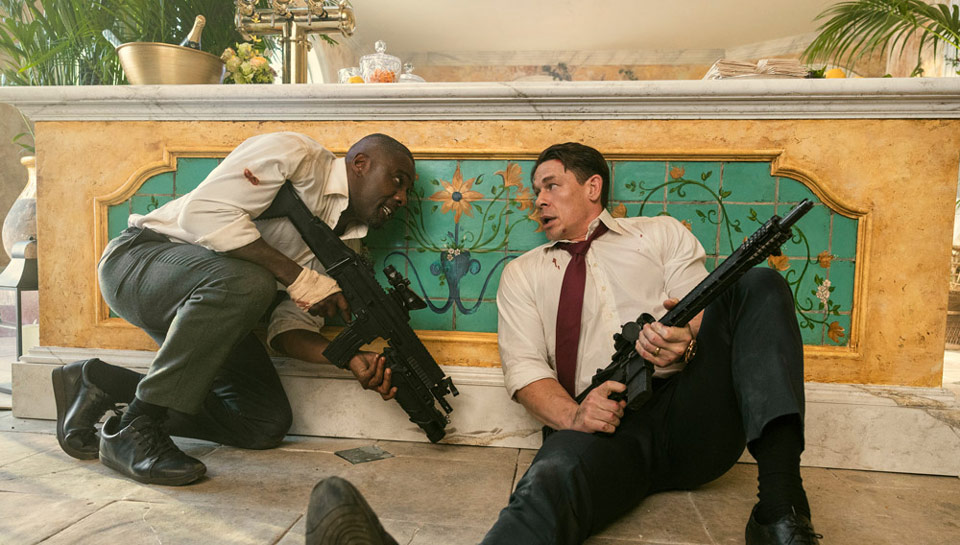
The unit receives numerous requests each year, mainly for advertising and fiction shoots. Internal shoots are handled by the SETE’s communications teams. “On average, we host one major project a year. Cat’s Eye (since 2024) and Lupin (since 2021) are among the last big French productions we have welcomed, along with many shorter shootings,” notes Virginie Polanski. The service has also seen an explosion in requests for social media content. “We adapt to the genre and size of each project. Our pricing list covers all types of projects, whether it’s feature films, series, TV movies, or even short films,” she explains. A film shoot keeps the site’s teams busy for several weeks from the submission of the filming request to its completion: at least three to four months for large-scale productions, especially when special installations or stunts are involved—one to two months for others, and a few weeks for advertising shoots.
Now heading up to the third floor, this time 276 metres above the ground. This area interests productions for filming stunts, particularly on the elevator. “The latest major productions we have hosted have shot impressive acrobatic scenes. For Cat’s Eye, we worked with stunt performers hanging from beams for hours in pouring rain,” recalls Virginie Polanski. Scenes that require the collaboration of different departments, as Btissame Ouahbi explains: “What makes our job beautiful is that we are at the crossroads of several departments: security, communications, legal, technical, and operations. We all work together.”
The filming unit is supported on site by a person dedicated to safety and security, especially in the case of stunts for which a rope access company is required. Each time, a first check is carried out with the film crew, followed by the signing of a risk prevention plan by both parties, then a "security visit" is organized. This visit involves all the relevant trades, such as technicians and electricians. “Sometimes we receive specific requests. Productions may want to extend the lighting or install their own, for example,” explains Virginie Polanski. These visits also make it possible to confront the project storyboard with the reality of the site. Like that day when “stunt performers from the series Lupin were supposed to climb from the esplanade to the first floor. They realized that the leaning structure did not allow for an optimal ascent and had to change their plans,” reveals Btissame Ouahbi.
Next comes the tower’s most secretive area: the fifth floor. Reaching it requires taking a hidden staircase that is closed to the public. The highest point of the Eiffel Tower is revealed, with no protective grids, just below the lightning rod. “While the second floor has an iconic view, the fifth floor attracts a lot of production because it is even higher than the summit accessible to the public, and it is very restricted. Very few people have access to it. Everything must be secured, objects as well as phones, for safety reasons,” explains Virginie Polanski. Btissame Ouahbi points to the safety fence that overlooks the fourth floor: “This is where the music video for the rap group PNL’s ‘Au DD’ was filmed. Rope access technicians were brought in to check the installations and ropes. This clip was a great opportunity to film the summit, but it will probably remain an exception.” Virginie Polanski adds: “There is also this running gag from the series Lupin: every day of filming, the production asked us whether Omar Sy could stand in front of the beacon’s beam, like Batman. The image would certainly be beautiful, but it would be really difficult to achieve.”

Below the third floor are other stairs, inaccessible to the public and without safety netting. Virginie Polanski recounts above the winds the filming of A View to a Kill, the 1985 James Bond film starring Roger Moore. “Some scenes took place on these very steps.” She points to the scaffolding structures located more than 300 metres above the ground: “Chase scenes were filmed here, with stunts between the beams.”
Weather conditions play a decisive role in filming. “Visits to the top of the Tower are not allowed when winds exceed 80 km/h. Stunts cannot be performed above 90 km/h,” says Btissame Ouahbi. “That was the case during the filming of some scenes for Murder Mystery 2. It was raining, which does not prevent filming because the equipment can be protected. Sometimes it even adds drama and mystery.” “Productions are aware of the constraints from the very first location-scoping visit. They adapt because they want to film here,” adds Virginie Polanski.

Back to the first floor, near the Madame Brasserie restaurant. “Shoots here are hosted by our sub-concessionaire, in coordination with our team, of course,” explains Virginie Polanski. The Gustave Eiffel Room, dedicated to professionals and conferences, is just a few metres away. It has hosted premieres, including that of Murder Mystery 2, and can be rented for filming. “Sometimes it also serves as a storage room, because we cannot keep the equipment, and everything must be installed and packed up at night.” Above it stands the platform where Céline Dion performed “L’Hymne à l’amour” during the opening ceremony of the Paris 2024 Olympic Games. The filming team supervised the night rehearsals and the concert. “We are present whenever a recording exists, whether it is a film, a digital creation or a fashion show,” reminds Btissame Ouahbi. Above her, areas of the tower that are about to be repainted. “There is always work going on somewhere; that’s another constraint. Sometimes workers are on site all night during our time slot. Our role is to find solutions. The key is that all departments coordinate so that everyone can do their job. The site’s teams know that these productions contribute to the site’s appeal.”
Last stop: the machinery room, beneath the west pillar. Here, the machines are still hydraulically operated, unlike those on the north and south pillars, which have been automated. “It is possible for productions looking for the behind-the-scenes aspect to shoot during the day”, explains Virginie Polanski. “I would love for a slasher film to be shot at the Eiffel Tower,” she continues, amused. “There has never been a horror film shoot here. Yet, the place is full of hidden areas, like these machineries or the basements, which make genuinely cinematic sets.”
On the esplanade, during filming nights, trucks can occasionally remain on site after unloading so that equipment can be stored as close to the Tower as possible. This area is also one of the filming locations available to productions, along with the gardens enclosed by the glass walls surrounding the site. Those walls themselves can be used: “A stuntwoman climbed the glass wall in Cat’s Eye,” says Virginie Polanski. “A scene from My Oxford Year was also filmed here,” adds Btissame Ouahbi, who also confides: “But for me, the most impressive production was the final episode of the series Sense8. Fireworks were launched over the Champ de Mars. It was incredible. It made the headlines the next day.”
A long-term job
The division’s work does not end when filming wraps. It must also ensure that copyrights are respected during post-production. For example, the Eiffel Tower’s lighting, created by the lighting designer Pierre Bideau (1941–2021), is protected by copyright.
The Eiffel Tower is preparing to welcome new shootings. All are subject to strict confidentiality agreements. It may be several years before the work carried out behind-the-scenes by Virginie Polanski and Btissame Ouahbi finally appearson the small or big screen…