Good morning everyone,
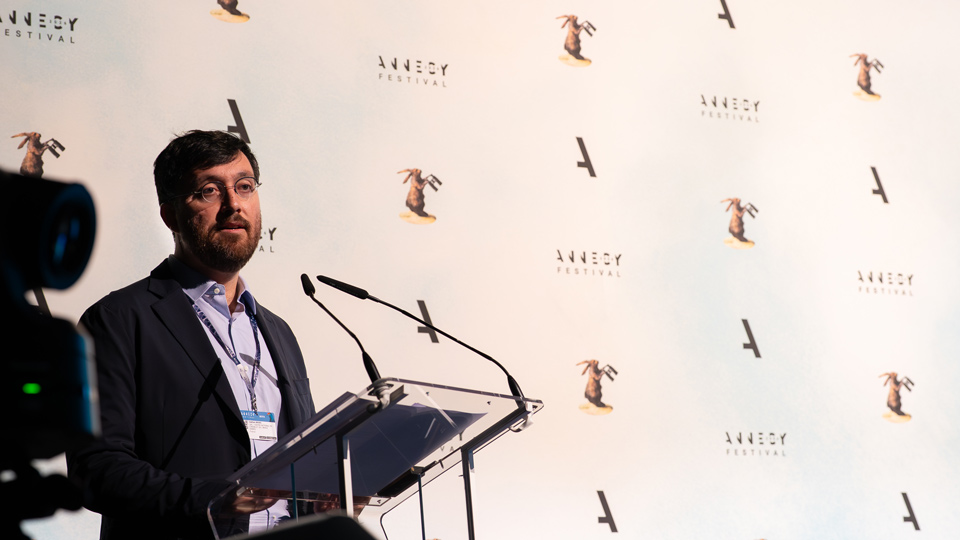
I am delighted to open this first edition of the Annecy European Animation Summit.
Let me begin by warmly congratulating the organizers, not only for the excellent idea of creating this new gathering, but also for the vision of making it a lasting European initiative.
Because what European animation needs today is not simply another event. It needs a strategic plateform: a regular meeting place where professionals, European institutions and public decision-makers can come together, share their analyses, build new partnerships, and work collectively on the major challenges ahead, in order to define our future rather than react to it.
Those challenges are significant.
We all know this: we are living through a decisive moment for the future of European creation.
Business models are under pressure. The global market is becoming increasingly concentrated in the hands of a limited number of players. Audience habits are changing rapidly. And artificial intelligence is opening up new possibilities, while also raising profound questions.
In this context, the European dimension matters more than ever for the animation sector. None of our countries can address these challenges alone.
If we want to seize control of the transformations reshaping our industry, rather than be reshaped by them, we must be able to think and act collectively.
This capacity to act together must begin with the way we support creation.
Public funding plays a central, unique role in this respect. It protects creative freedom. It encourages artistic risk-taking. It makes it possible for original works to emerge — works that reflect the diversity of our cultures and our sensibilities. And it makes cultural diversity the very foundation of our narrative sovereignty.
European funding is not an abstract budget line. We see its impact every year in the films and series that bring European animation to audiences around the world.
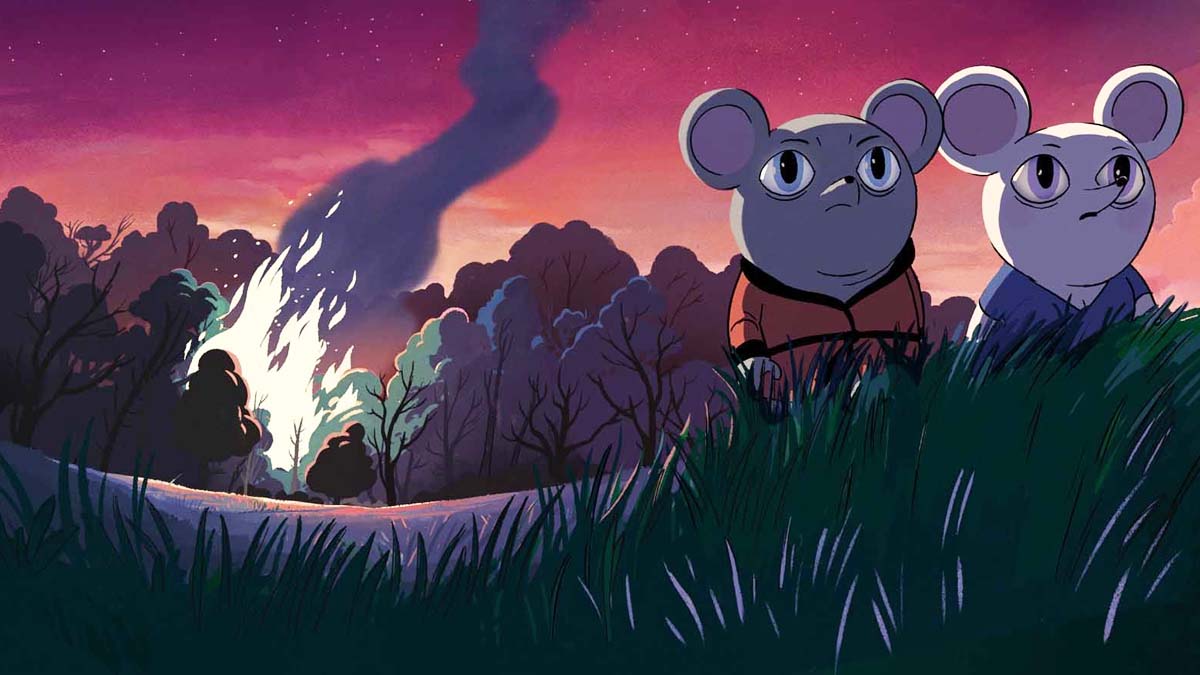
I am thinking, of course, of Flow, which was celebrated here in Annecy before winning the Academy Award for Best Animated Feature in 2025.
I am also thinking of Robot Dreams, supported by the MEDIA programme from its development stage, awarded in Annecy, honoured at the European Film Awards, and nominated for an Academy Award in 2024.
These successes are the tangible result of a collective ambition. They reflect our shared conviction that animation occupies a very special place in our cultural landscape.
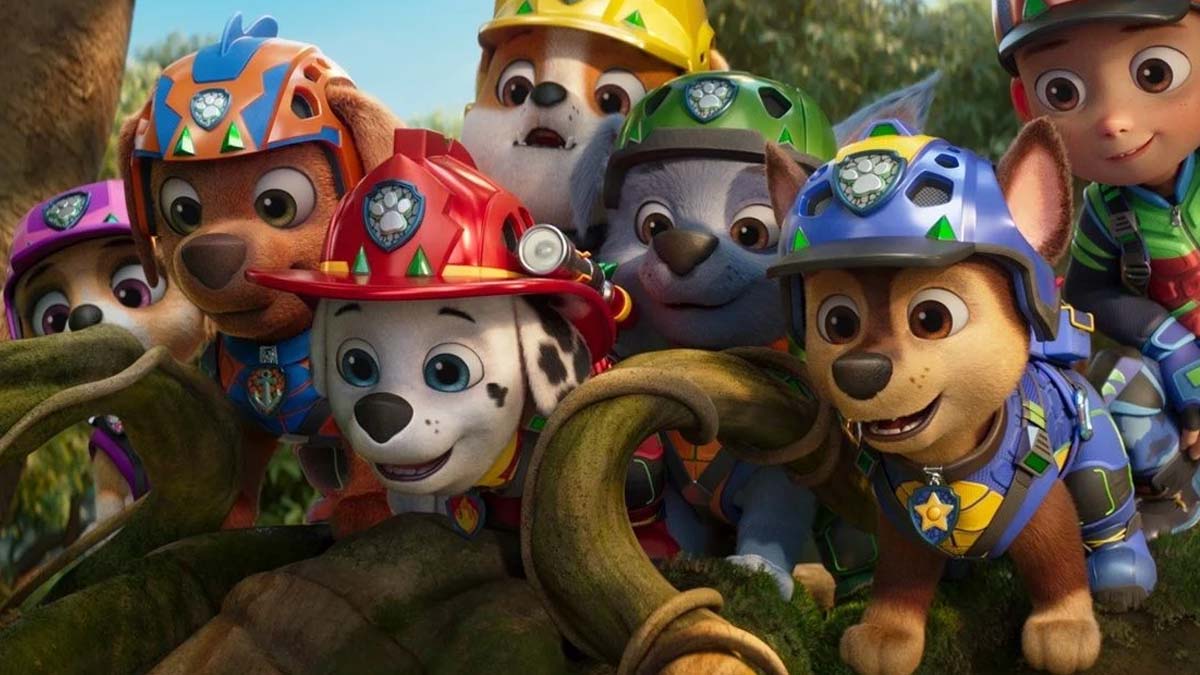
For many children, animation is the first gateway to imagination. It gives them their first images of the world, their first shared stories, and their first heroes — heroes who sometimes stay with them for a lifetime.
Animation actually speaks to audiences of all ages, crosses linguistic borders, and showcases European cultural diversity far beyond our continent. It is therefore a highly creative sector — but also one particularly exposed to risk. And this reality must be taken into account.
This is why initiatives that help share and support creative risk are so important.
I am thinking of the Council of Europe’s pilot programme for the co-production of series, which recently supported The Amazing Adventures of Lost Socks, a Polish-Portuguese animated co-production. I am also thinking of the joint initiative led by the EBU, France Télévisions and Cartoon, which supports the development of ambitious projects such as Pig & Andersen, My Life is a Manga and Elle(s).
These initiatives remind us of a simple truth: creativity and innovation rarely happen in isolation. They require partners who are willing to invest, to cooperate, and to take risks together. At the end of the day, the question is rather simple: whether Europe will have the infrastructure to keep producing the stories that define us — or whether we will become consumers of other people's imaginations.
It is precisely to preserve this creative capacity that the ongoing discussions surrounding the future Agora EU programme are so important.
Because what is at stake behind budgetary decisions is our ability to keep producing our own stories, to nurture the diversity of our imaginations, and to preserve what makes the European model unique.
If Europe wishes to maintain its cultural sovereignty, it must equip itself with the means to do so. And this also means preserving the role of independent producers, who remain at the heart of some of our most ambitious and innovative creative projects.
But Europe does not act through funding alone. It also acts through the rules it sets for itself.
The Audiovisual Media Services Directive is a particularly powerful example of this. By allowing Member States to integrate streaming platforms into their national financing systems, it reaffirmed a simple principle: those who benefit from the circulation of works must also contribute to the creation of future works.
In France, this evolution has significantly strengthened our ability to support creation. Streaming platforms have become important partners in the financing of European works.
However, we have also seen that not all sectors have benefited equally from this new momentum. Animation, in particular, has not received the level of investment that its creative importance and economic potential would justify.
This is why, here in Annecy last year, the French Minister of Culture announced changes to our regulatory framework, so that platform investment could benefit animation and documentary production to a greater extent.
Because supporting European animation is not only about preserving an heritage. It is also about ensuring that our rules continue to evolve alongside the market.
And, as we all know, the market of 2026 is no longer the market of 2018.
This is particularly true when it comes to how audiences discover and access European works.
We must face reality: despite the quality of European creation, Europeans still watch more works produced outside Europe, particularly from the United States. Around 60% of viewing time is devoted to American works, compared with only 30% for European works.
This means that the visibility of European works has become just as important as their financing.
At the same time, significant regulatory asymmetries have emerged — between traditional players and new digital platforms, but also among digital players themselves — whether in relation to advertising rules, prominence obligations or content distribution requirements.
France will therefore continue to defend a clear position within the European institutions: we need a framework that guarantees both genuine cultural diversity and fair conditions of competition.
Let me conclude by reflecting briefly on the link between the European political project and the future of animation in Europe.
Before Europe was born from a treaty, it was born from imagination.
Great works of the mind were, in a very real sense, its first institutions. And they remain among its strongest foundations. We think, of course, of Victor Hugo, Stefan Zweig, Milan Kundera, and so many others.
Among all the arts, the moving image has given this emotional construction of Europe an unparalleled reach. And animation has a central role to play in this. It can create familiarity between peoples who do not share the same language. It can bring children and families closer to cultures other than their own. And in doing so, it can play a political, economic and democratic role of unique importance in the service of the European project.
Today, Europe — attacked from the outside and challenged from within — is once again being put to the test. War has returned to our continent.
The balance of power with other major powers is increasingly harsh. And democracy — our most precious common good — is more fragile than ever under the combined pressure of populism and disinformation.
In this situation, if we want to defend the European project, protecting it will not be enough. We must also renew it.
The central question is the freely given support of our citizens — especially younger generations, for whom the twentieth century is not even a distant memory, but no memory at all.
One does not fall in love with a single market. No one pins the text of Directive twenty-ten slash thirteen E-U, to their bedroom wall. But people do become attached to stories, to characters, to emotions that can be shared. And thanks to this directive, the European project continues to be nourished by European works.
So the question is simple: must we wait for the share of European works to decline before recognising their unique value?
We have an opportunity to bring together our responses to two existential challenges: preserving our European and democratic framework, and strengthening our ability to remain sovereign in our narratives and in our collective imagination.
For that, we have no choice: we must give European animation the ambition it deserves, and build, with our closest partners around the world, from Canada to Asia, a common front for cultural diversity and creative sovereignty.
I am delighted that this morning will allow us to discuss all these issues together. I would like to warmly thank all the speakers who have agreed to take part in these discussions, and I wish you all excellent and productive debates.
Thank you very much.